Buy land, they ain’t making any more of it.

mars_panorama
Available: Cheap Land on Mars -- Panoramic Views

Ever wonder how much that would cost you in San Francisco? Ever think it might make sense to buy your own little piece of heaven and build the house of your dreams on it rather than pay through the nose for an old Victorian lady wearing a lot of make-up and suffering from 100 year-old plumbing?

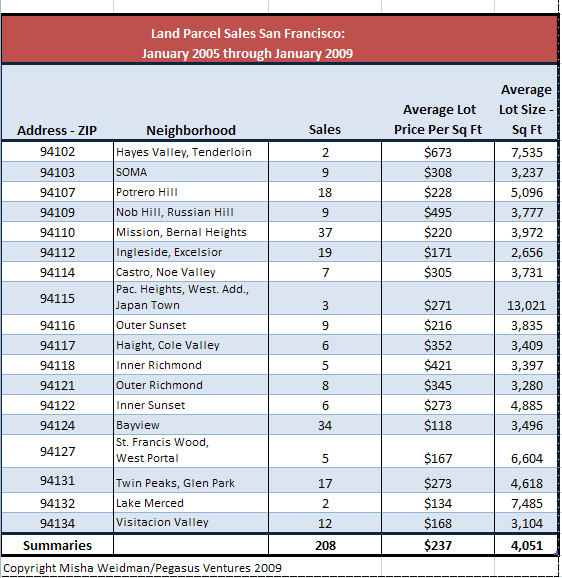
First off, you may spend a lot of time looking. Since 2005, there have only been 216 undeveloped land sales in San Francisco. I’ve tabulated the results by ZIP code for the 208 for which there was sufficient information to calculate the price per square foot.
picture-21 ...  Additional Details

More Grim News on Housing

Saturday’s NY Times proclaims “A Gloomy Outlook for Home Sales’ Big Season.” The headliner, by the way, was “Job Losses Hint at Vast Remaking of U.S. Economy.” Is it really any wonder we have difficulty sleeping a’ nights?

Here are some of the cheery highlights:

  • One out of every seven apartments and houses in the US are vacant, a level not seen since the 1960’s. That’s about 19 million units
  • Less than a third of those are actually for rent or for sale, meaning that many more could yet come onto the market.
  • New contracts for previously owned homes fell at their fastest pace for two years.
  • Some areas that have fallen fastest, like inland California, are seeing improved sales.
  • Urban areas that have withstood the recession reasonably well, like San Francisco and New York, are “frozen.”

We pass Elk Grove on our way up to Tahoe.  Beautiful spot east of Sacramento.  You can buy a 3 BR house there for $193,000.  The same house sold for $336,000 four years ago.  The mortgage is a $100 less than it costs to rent a 2BR apartment.  It’s hard not to think of that as positive.  That is, unless you were the one who lost $143,000 in equity. ...  Additional Details

SF Home Prices at 2003 Levels

Sorry, folks, but it’s that bad — or good, depending on your perspective.

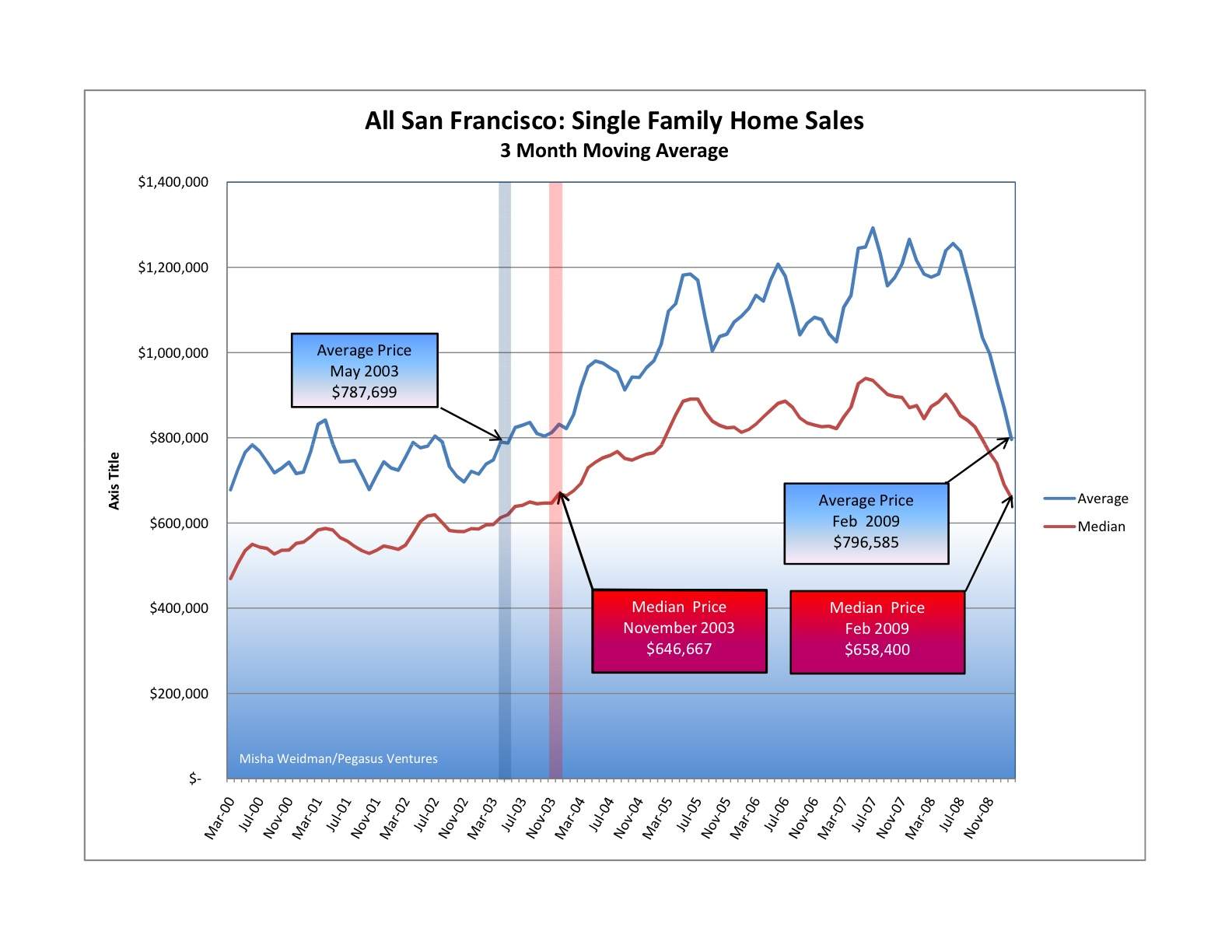
I tracked average and median prices going back to 2000 for the ten combined MLS districts that comprise the San Francisco Multiple Listing Service — the big database that realtors use to list properties and record sales information .  (The MLS District Map is here, on my Market Trends page.)  Here are the results (click to make the chart bigger):

san-francisco-price-trends-2000-presentsmall

Pretty scary stuff, especially when you look at the suislide (a new word is born?) that started in June of last year and shows no signs of slowing down. ...  Additional Details

January Data Sings the Blues

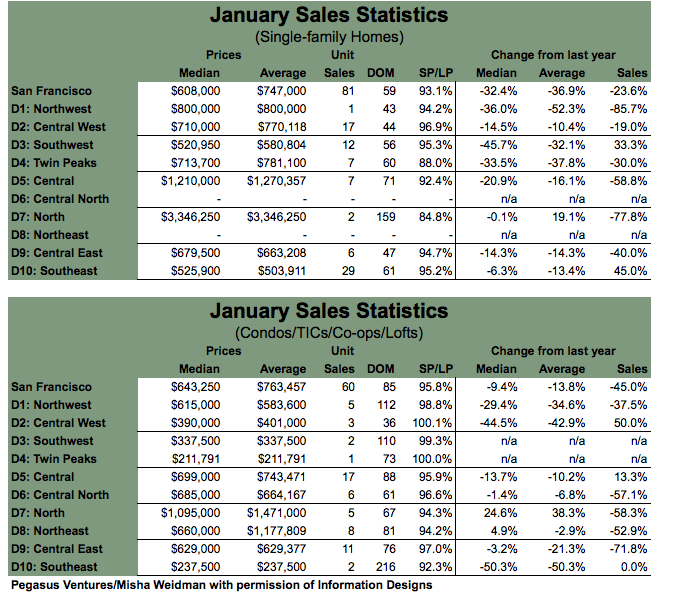
Here’s the latest sales data broken down by MLS District.  Full reports are available here under the Market Trends Tab and are well worth a look.

picture-2

Median and Average prices are down substantially year over year for single family homes in all districts except District 7 (“North”, which includes top-shelf enclaves like Pacific Heights and the Marina), but with only 2 sales for the month in that area, it’s not a meaningful statistic.  Indeed, as I’ve pointed out in previous blogs, sales drop off so dramatically every year during December/January that I’d be cautious reading too much into the  statistics for those particular months.  ...  Additional Details

On the Economic Front, A Rare Voice of Optimism

It’s hard to find much cause for hope these days.  The headlines tell us every day about tectonic shifts in our economic landscape.  We read about layoffs spiraling into the millions, major institutions crumbling, government bail-outs of unprecedented proportion.  Just one example of the doom and gloom:  David Brooks on today’s NY Times Op Ed page, describes the situation as a psychological crisis rather than an economic one, a crisis potentially so bad that no amount of money thrown at the problem will fix.
In this media-driven echo chamber, it’s hard to hear many sober, let alone optimistic, voices.  Dr. Jim Smith may be one such.  He was the keynote speaker at a major builders’ trade show in mid-2007 and accurately predicted both the looming recession – though not its depth – and a Democratic win as a result.
His current prognostications are less dire than most.  According to an article in today’s Wall Street Journal, he sees GDP of 4% by year’s end. There’s no more than a one line quote in the WSJ, but I was able to find more details in an economic forecast he wrote at the end of 2008 in his capacity as Chief Economist for the wealth-management (the latest oxymoron?) firm, Parsec Financial. (Smith is also a professor at Western Carolina University’s Institute for the Economy and the Future) and a former co-chair of the European Council of Economists.)
Here are a few highlights.  You can download his full forecast here.
•    The unemployment news is bad and is likely to get worse, but oft-quoted comparisons to earlier periods like after World War II are misguided because the national economy is so different.  The unemployment picture should start turning around in a few months.
•    Like Brooks, he sees a huge crisis of confidence underpinning this melt-down, just as it has underpinned other financial crises.  Here’s the takeway:  Historically, when huge resources are thrown at financial panics, three things have always happened:  The panic stops; stock markets boom; and the real economy soars.
•    Things to look for to signal a turnaround:  an upturn in housing starts, especially single family units.  Next, an increase in new vehicle sales.
•    The consensus view is that there won’t be a turnaround in the economy until the summer or fall 2009.  He thinks that view is too pessimistic.
I sure hope he’s right. ...  Additional Details

DOM Roll Please

A couple of posts ago, we dispensed with Absorption Rate as a good barometer of the market since there appeared to be no correlation between how much inventory was available in relation to sales rates and where median prices were going.  I asked whether there might be a different metric that would correlate better, like the oft-quoted Days on Market or “DOM.”

In essence, DOM tracks the average number of days that properties have been on the market from the time they became active on the MLS (Multiple Listing Service used by realtors) to the time they actually sell. ...  Additional Details

…And what $850,000 buys in Noe Valley

4317 24th Street @ Douglass originally listed back in October for a cool $995,000.  It’s advertised as a  4 BR/2.5 BA.  (Ahem.  This is a fixer folks.)

4317-24th-street
4317-24th-street

Interesting to note that 4209 24th Street, just a block away and very much a fixer along the same lines,  sold in December 08 for $896,000.  That was $11,000 above the asking price.

4209-24th-street
4209-24th-street

What $2.1 million buys in Noe Valley

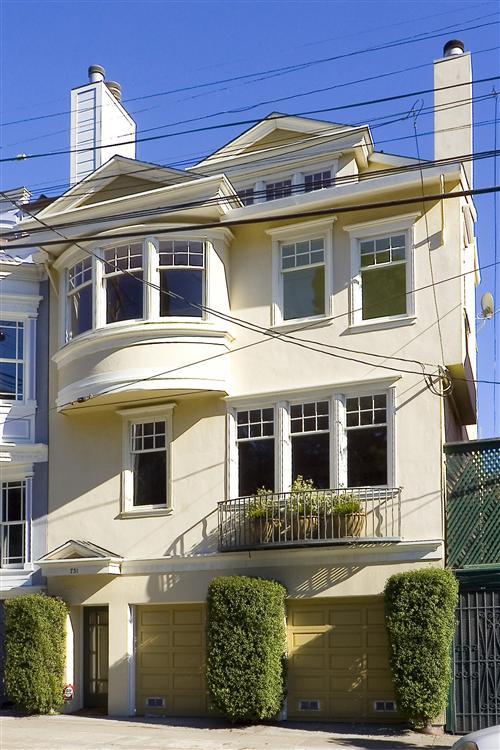
Out on brokers’ tour yesterday, I looked in on two homes  available in my Noe Valley neighborhood, priced within $2,000 of each other.  731 Douglass (at 24th Street) sold in March 2005 for $1.944 million and a mere $29o,000 in March 1997, when it was a sad-looking 1200 ft marina-style house, with a 6-car garage.  Back then:

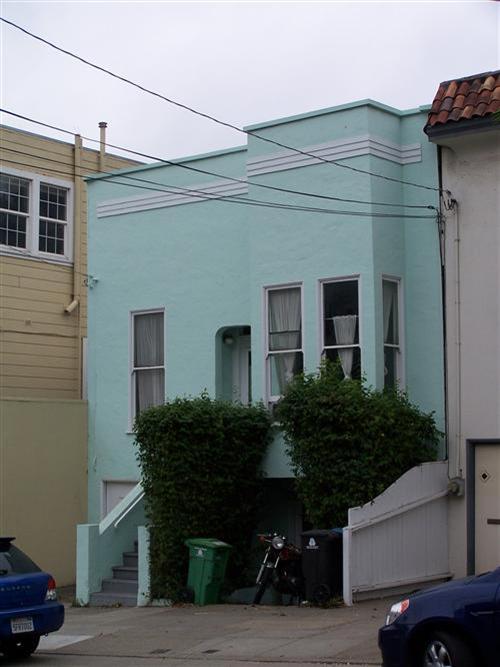
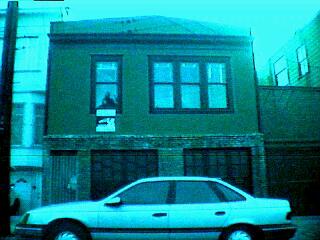
731-douglass-old

and now:

731-douglass-now

In 1999, the owners completely redid the building, right around the same time that my wife and I were remodeling our house just around the corner and converting it from a two-unit building into a single family home.  At the time, there weren’t too many larger homes in Noe Valley.  Now, everybody seems to be adding floors or building out the basement. ...  Additional Details